
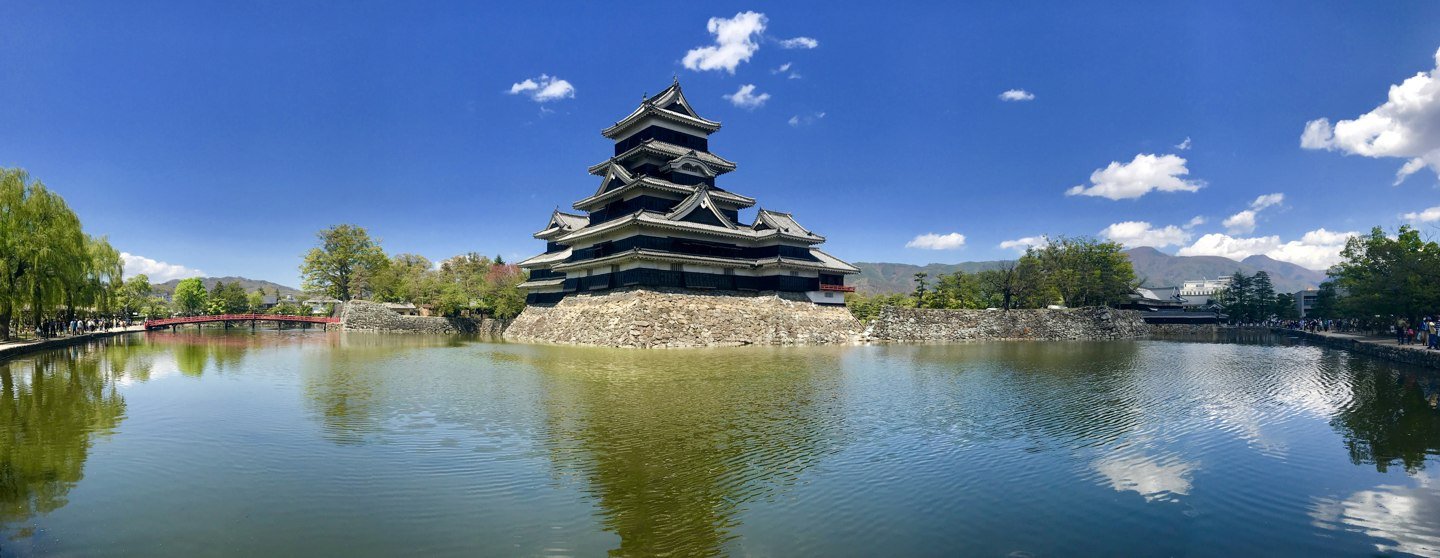
Matsumoto Castle
松本城
Count the floors, then question the outline
Matsumoto’s keep appears to have five storeys from outside, but contains six floors. The official introduction dates the main keep to 1594 and describes how local preservation efforts helped save it during the Meiji period. The mismatch between outside and inside is a useful reason to look slowly: rooflines can organise a building’s image without telling you exactly how its internal space works.
A group of buildings on level ground
Matsumoto is a flatland castle. Its defensive setting therefore relies on the arrangement of moats, walls and gates rather than a mountaintop. The National Treasure complex comprises the main keep, the smaller Inui keep, a connecting tower and the Tatsumitsuke and Tsukimi towers. Read these as a connected group. A single frontal photograph compresses that relationship; following the named structures on the official plan restores it.
Access is a real planning decision
The official FAQ identifies Kuromon on the south as the entrance to the castle grounds. The red Uzumibashi bridge is not an alternative entrance. It also states that wheelchair entry to the keep is not possible and that there are no toilets inside the keep. These are useful constraints to check before buying a ticket or setting a meeting point; the park and the tower are different visitor experiences.
Compare structures, not just colours
Himeji’s white plaster and Matsumoto’s dark exterior make an easy visual pairing, but a richer comparison asks how their towers connect, how ground level affects defence and how repair keeps historic timber buildings in use. Start with a circuit that lets you understand the outline, then decide whether an interior visit fits your mobility and interests. Recheck the official visitor page for current admission and any temporary changes.
Highlights
- A flatland castle built on a plain rather than a hilltop, whose complete defences joined inter-connecting walls, moats and gatehouses.
- The keep, completed in the late sixteenth century, keeps its original wooden interiors and external stonework; it is a National Treasure and one of only twelve surviving tenshu, with four further buildings also designated National Treasures.
- Built about 50 years after firearms reached Japan, its thick walls carry both rectangular musket windows (teppozama) and vertical bow windows (yazama); since 1988 it has housed the Matsumoto Castle Gun Museum.
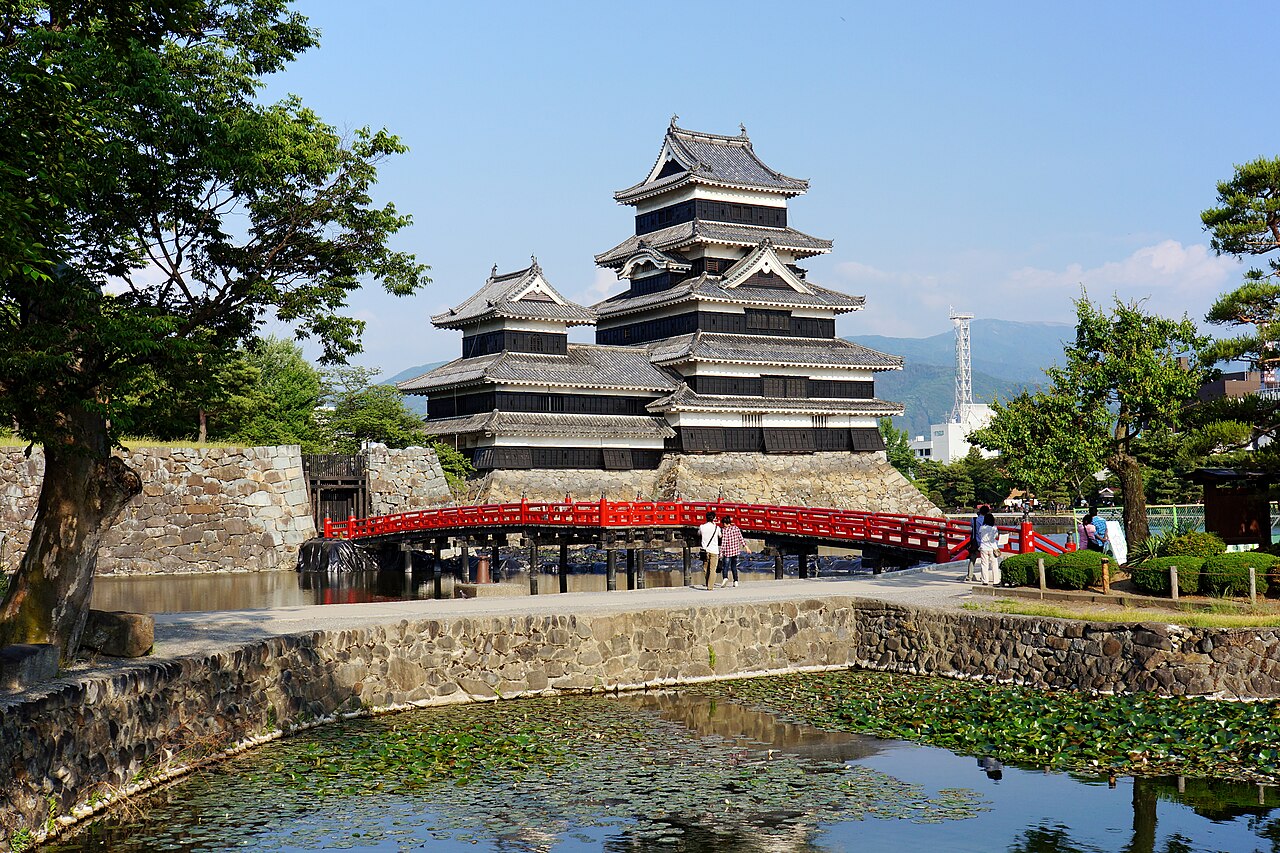
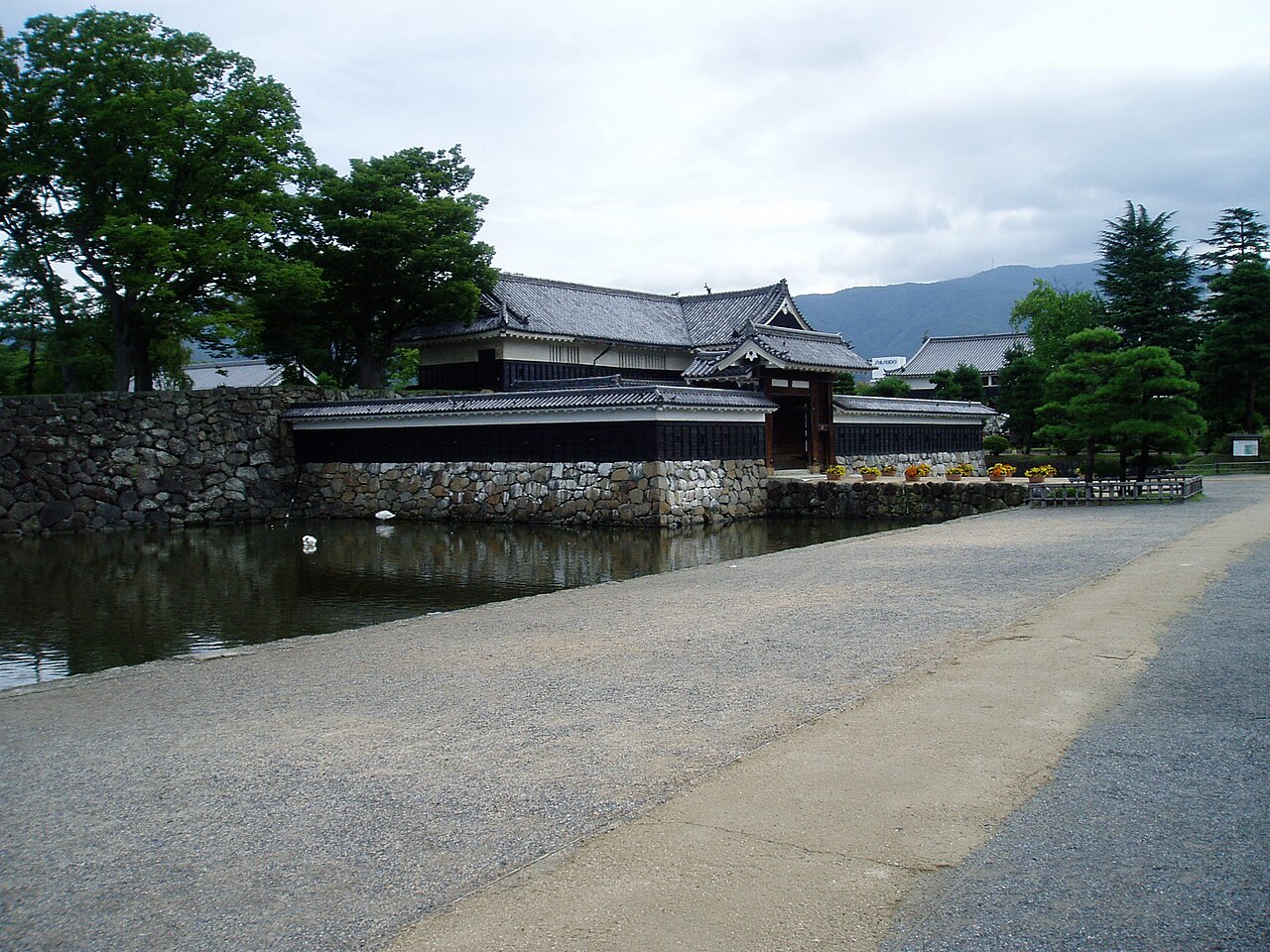
Photographs are served from this site; each caption names its author and licence. Castle facts above are drawn from the castle's Wikipedia article, credited under CC BY-SA in Sources below.
Sources and next steps
Original English guide · Sources reviewed 6 October 2026. Operational details can change.
- DiscoverFive exterior storeys, six floors
- NoticeHistoric keep and moat setting
- RememberMatsumoto, Nagano
Restoration work and access may change. Historic interiors can have steep stairs; check official visitor information before travelling.
Matsumoto Castle across its moat, 2019. Manishprabhune · CC BY 4.0 · Photo details
Official source · Source checked 2026-10-06 · Original English guide