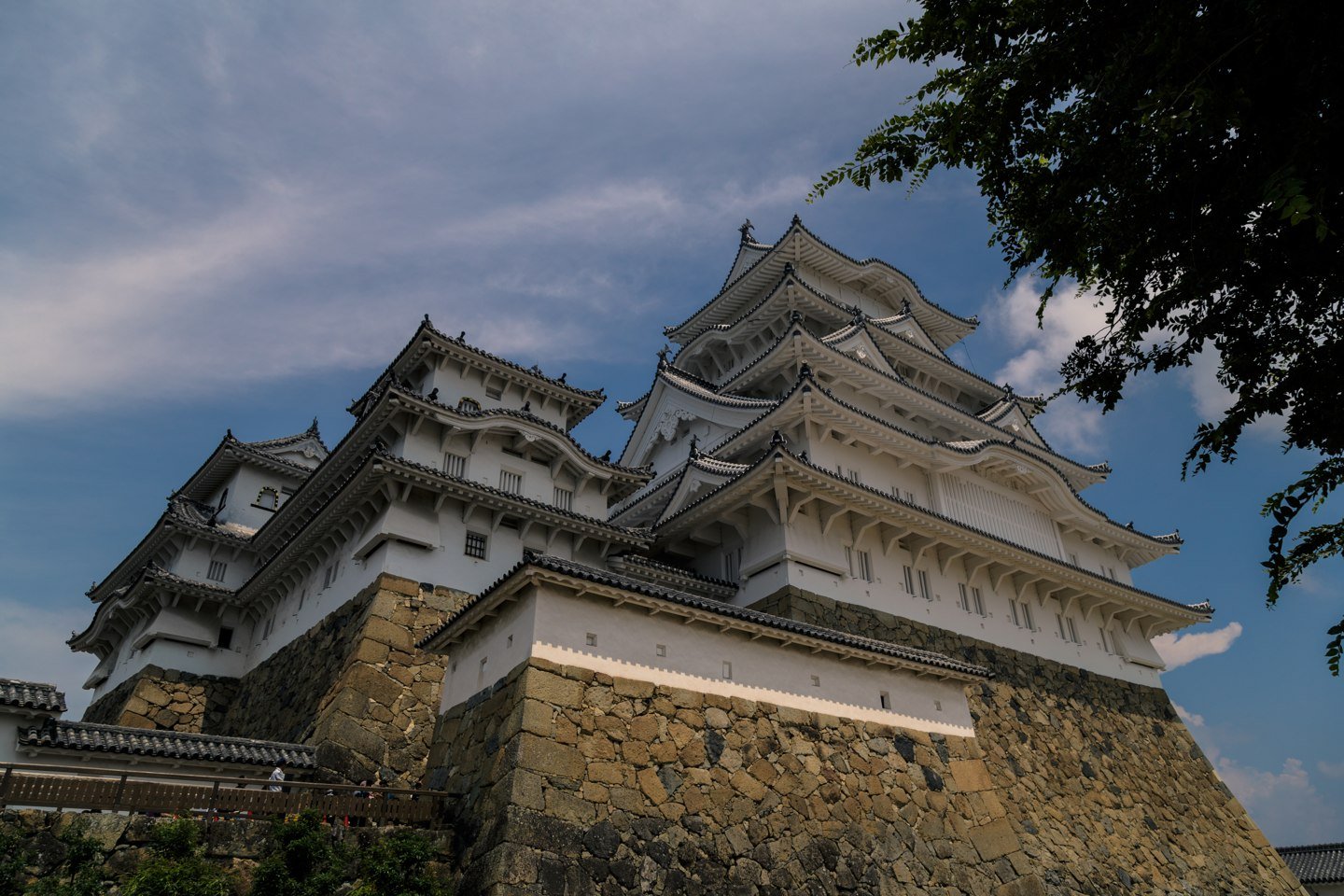
 White-plaster walls
Himeji Castle’s main keep, 2016.
Himeji Castle
White-plastered walls and a layered defensive layout give Himeji its unmistakable profile. The early-17th-century rebuilding shaped much of the castle seen today. … Read more
 Japanese Castles
Compare 12 castles: buildings, repair and history · All guides
White-plaster wallsHimeji Castle’s main keep, 2016.
White-plastered walls and a layered defensive layout give Himeji its unmistakable profile. The early-17th-century rebuilding shaped much of the castle seen today. … Read more
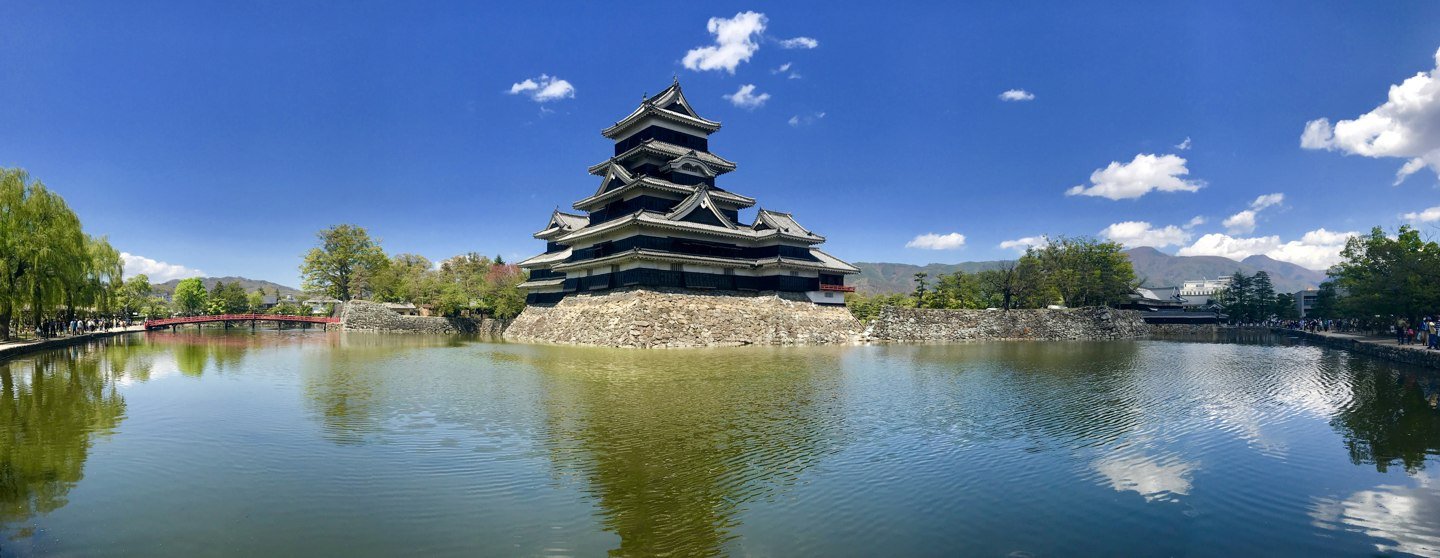 Black-lacquered walls
Matsumoto Castle across its moat, 2019.
Matsumoto’s dark keep looks five storeys tall from outside but has six floors within. Local preservation efforts helped save the castle during the Meiji period. … Read more
No featured castle matches those filters. An empty result does not mean there are no castles in the region — the full collection is browsable by region and theme.
The full collection covers 397 castles in all eight regions of Japan. No live availability, reservations or purchasing are offered. Restoration work and access may change. Historic interiors can have steep stairs; check official visitor information before travelling.
Browse all 397 castles by region · Browse by theme · How to read a Japanese castle
Twelve castles still keep their original main tower; five of those keeps are National Treasures. The major castles below are the natural place to start.
White-plaster wallsHimeji Castle’s main keep, 2016.
White-plastered walls and a layered defensive layout give Himeji its unmistakable profile. The early-17th-century rebuilding shaped much of the castle seen today.
Black-lacquered wallsMatsumoto Castle across its moat, 2019.
Matsumoto’s dark keep looks five storeys tall from outside but has six floors within. Local preservation efforts helped save the castle during the Meiji period.
 White-plaster walls
Hikone Castle is a Japanese Edo-period castle in the city of Hikone, Shiga Prefecture.
 White-plaster walls
犬山城天守 (愛知県犬山市大字犬山字北古券、2023年 (令和5年) 3月)
An original keep above the Kiso River. One of the 12 Japanese castles still in existence which were built before the Edo period.
 Japanese castles
Matsue Castle in Matsue, Shimane prefecture, Japan
A Japanese castle in Matsue, Shimane. A castle in Matsue, Shimane.
 Japanese castles
Maruoka Castle
A Japanese castle in Sakai, Fukui. Japanese castle in Fukui Prefecture.
 White-plaster walls
Keep tower of the Hirosaki Castle
The northern keep among cherry trees. Castle in Hirosaki, Aomori prefecture, Japan.
 Japanese castles
photo of Bitchū Matsuyama castle Hon-maru
A Japanese castle in Uchisange, Okayama. Japanese castle in Takahashi, Okayama prefecture.
 Japanese castles
Kōchi Castle — reference photograph
A Japanese castle in Marunouchi, Kochi. Japanese castle in Kōchi city.
 Japanese castles
丸亀城 - 日本国香川県丸亀市。
A Japanese castle in Marugame, Kagawa. A castle in Marugame, Kagawa.
 Japanese castles
Uwajima Castle taken by myself in August 2006
A Japanese castle in Uwajima, Ehime. Building in Uwajima, Ehime Prefecture, Japan.
 Black-lacquered walls
Marunouchi, Matsuyama, Ehime Prefecture 790-0008, Japan
The hilltop keep of Iyo. Castle in Iyo province (now Matsuyama, Ehime prefecture), Japan.
 White-plaster walls
Osaka Castle in Chuo-ku, Osaka, Osaka prefecture, Japan
Osaka’s towering landmark keep. Japanese castle in Chūō-ku, Osaka, Japan.
 White-plaster walls
The keep of Nagoya Castle (名古屋城, Nagoya-jō) located in Nagoya, Aichi Prefecture, Japan. Originally built around 1525, destroyed during World War II. Reconstructed in 1959, currently under exhibition.
The golden shachihoko keep. Japanese castle located in Nagoya, central Japan.
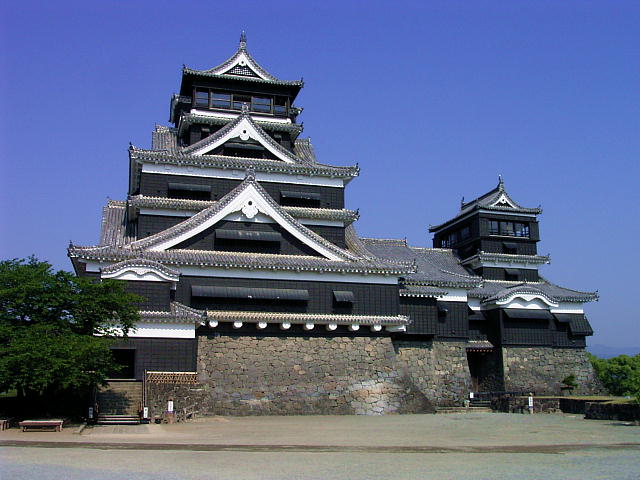 Black-lacquered walls
熊本城の大天守と小天守。 撮影者 : Birdman 撮影日 : 2005/5/29
 Japanese castles
Part of the left screen of a pair of six-panel folding screens, "View of Edo" (Edo zu), from the 17th century. Upper middle of first panel, left screen. Central enceinte of Edo Castle, Castle Tower, Bairinzaka, Hiraka…
A Japanese castle in Chiyoda, Tokyo. Castle in Tokyo, Japan.
 Japanese castles
Panoramic view of buildings containing Ninomaru reception rooms at Nijo Castle in Kyoto, Japan. Stitched from 2 images using Canon PhotoStitch 3.1.
A Japanese castle in Nakagyō Ward, Kyoto. Castle in Kyoto, Japan.
 Vermilion-lacquered walls
at Shuri Castle in Naha, Okinawa prefecture, Japan
The vermilion palace of the Ryukyu kings. Ryukyuan gusuku castle.
 Japanese castles
仙台城大手門脇櫓(1967年再建)
A Japanese castle in Aoba-ku, Miyagi. Castle in Sendai city, Miyagi prefecture, Japan.
 White-plaster walls
和歌山城 曲輪
 Japanese castles
photo of Okayama Castle
A Japanese castle in Marunouchi, Okayama. Japanese castle in Kita-ku, Okayama, Japan.
 Japanese castles
Hiroshima Castle — reference photograph
A Japanese castle in Motomachi, Hiroshima. A castle in Motomachi, Hiroshima.
 Japanese castles
At Kanazawa Castle in Kanazawa, Ishikawa prefecture, Japan.
A Japanese castle in Kaga Province, Ishikawa. Castle in Kanazawa, Ishikawa prefecture, Japan.
 Castle ruins
Takeda Castle
姫路城
Himeji’s white keep is the starting point, not the whole castle. The official historical guide explains that its defences once extended into neighbourhoods enclosed by moats and embankments. Ikeda Terumasa’s early-seventeenth-century works enlarged both fortress and town. As you move through the site, ask how a gate, wall or change of direction controls movement, rather than looking only for the next clear view of the main tower.
The keep is a timber framework of posts and beams, not a solid masonry block hidden by white paint. Himeji’s official guide describes central columns carrying major loads and a twentieth-century restoration in which the keep was dismantled, repaired and reassembled. That makes preservation part of the story: a surviving historic structure can contain carefully renewed material without becoming a newly invented castle.
The West Bailey’s long gallery served more than a defensive purpose. The castle guide connects parts of it with the female attendants of Princess Sen’s household. Looking at the keep alongside the gallery helps separate a castle’s military image from the people and everyday functions it housed. Compare that with Matsumoto’s linked towers: the useful question is how each complex joins different spaces together, not which colour looks more dramatic.
A visit focused on architecture benefits from time for the route and the smaller details, not only the summit of the keep. Use the official visitor information to check entry arrangements, current restrictions and accessibility before deciding how much interior climbing fits your group. This article does not promise an unobstructed route, a particular queue length or access to every building.
Original English guide · Sources reviewed 6 October 2026. Operational details can change.
Restoration work and access may change. Historic interiors can have steep stairs; check official visitor information before travelling.
Himeji Castle’s main keep, 2016. nobu3withfoxy · CC BY 2.0 · Photo details
Official source · Source checked 2026-10-06 · Original English guide
松本城
Matsumoto’s keep appears to have five storeys from outside, but contains six floors. The official introduction dates the main keep to 1594 and describes how local preservation efforts helped save it during the Meiji period. The mismatch between outside and inside is a useful reason to look slowly: rooflines can organise a building’s image without telling you exactly how its internal space works.
Matsumoto is a flatland castle. Its defensive setting therefore relies on the arrangement of moats, walls and gates rather than a mountaintop. The National Treasure complex comprises the main keep, the smaller Inui keep, a connecting tower and the Tatsumitsuke and Tsukimi towers. Read these as a connected group. A single frontal photograph compresses that relationship; following the named structures on the official plan restores it.
The official FAQ identifies Kuromon on the south as the entrance to the castle grounds. The red Uzumibashi bridge is not an alternative entrance. It also states that wheelchair entry to the keep is not possible and that there are no toilets inside the keep. These are useful constraints to check before buying a ticket or setting a meeting point; the park and the tower are different visitor experiences.
Himeji’s white plaster and Matsumoto’s dark exterior make an easy visual pairing, but a richer comparison asks how their towers connect, how ground level affects defence and how repair keeps historic timber buildings in use. Start with a circuit that lets you understand the outline, then decide whether an interior visit fits your mobility and interests. Recheck the official visitor page for current admission and any temporary changes.
Original English guide · Sources reviewed 6 October 2026. Operational details can change.
Restoration work and access may change. Historic interiors can have steep stairs; check official visitor information before travelling.
Matsumoto Castle across its moat, 2019. Manishprabhune · CC BY 4.0 · Photo details
Official source · Source checked 2026-10-06 · Original English guide