

Bitchū Matsuyama Castle
備中松山城
Castle in brief
Bitchū Matsuyama Castle stands in Uchisange, Okayama. Japanese castle in Takahashi, Okayama prefecture. It is one of only twelve castles in Japan whose original main keep survives. The At a glance table below collects its type, heritage designations and official visitor link.
About Bitchū Matsuyama Castle
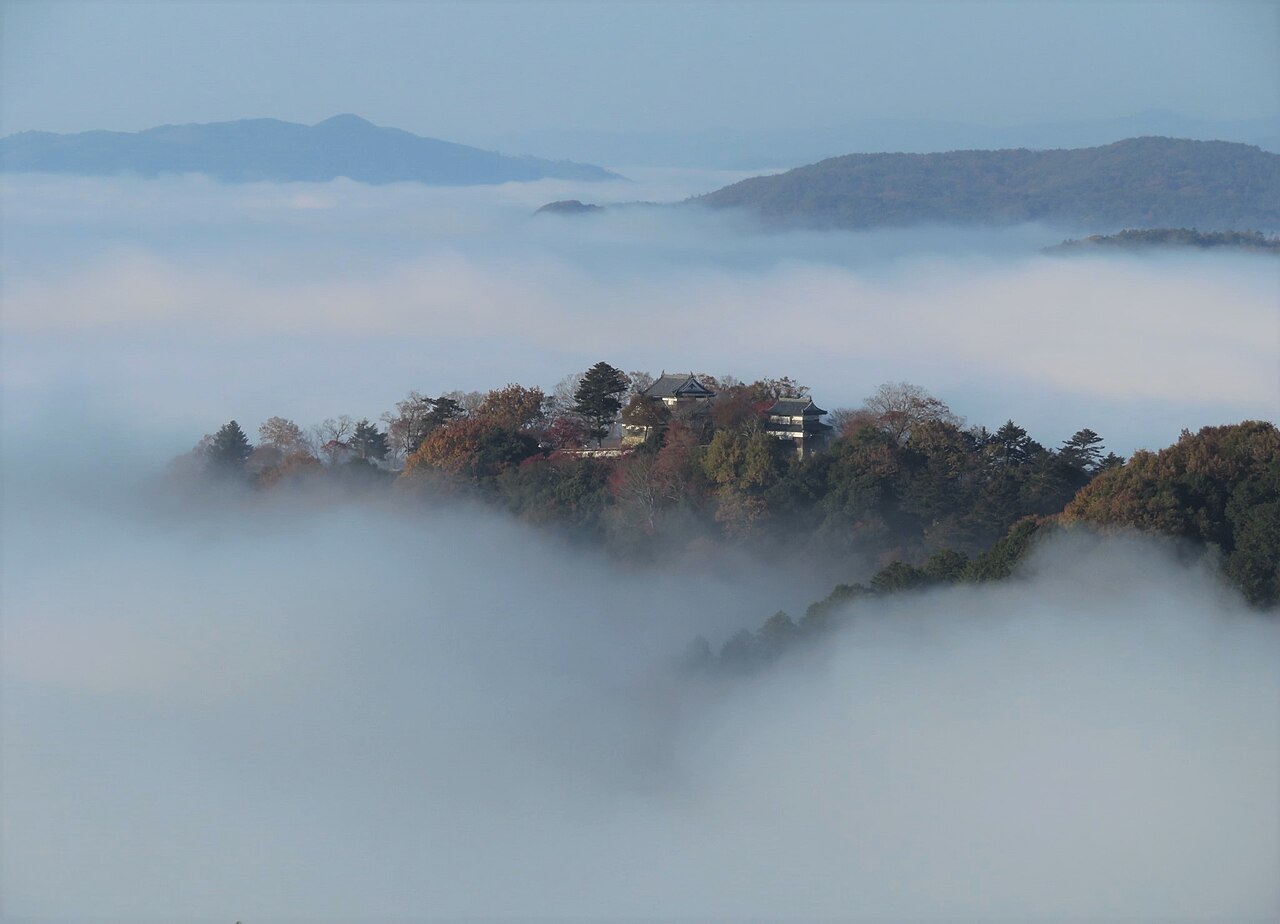
Bitchū Matsuyama Castle (備中松山城, Bitchū Matsuyama-jō), also known as Takahashi Castle (高梁城), is a Japanese castle located in the city of Takahashi, Okayama Prefecture, in the San'yō region of Japan. Along with having one of only twelve remaining original tenshu (main keeps) in the country, Bitchū Matsuyama Castle is notable as the castle with the highest elevation above sea level in Japan at 430 meters (1410 ft). It has been protected by the central government as a National Historic Site since 1956.
History
A fortification was originally built on a nearby mountain (Mount Omatsu) in 1240 AD by Akiba Shigenobu, but its details are not clear. In the Muromachi period, the Hosokawa clan was shugo of Bitchū Province, but ruled through local proxies. Takahashi Muneyasu constructed a new castle at the current location on Mount Gagyū in 1331, though the design of this castle differed from the one that stands on the site now. Mount Gagyū is located north of the center of modern Takahashi, and is a long ridge with an elevation of approximately 430 meters, overlooking the Takahashi River. The location is of strategic importance in controlling the north-south transportation route between the Seto Inland Sea and the San'in region on the Sea of Japan, and the east-west transportation route between Tsuyama in Mimasaka Province and Miyoshi in the center of the Chūgoku region.
In the early Sengoku period, the Shō clan supplanted the Hosokawa and occupied Bitchū Matsuyama Castle in 1532, making it their stronghold in their campaign against the Amago clan in Izumo Province. By the mid-century, the Mōri clan from Aki Province had defeated the Amago while simultaneously supporting the Mimura clan against the Shō and the Ukita clans. Mimura Iechika (1517–1566) captured Bitchū Matsuyama Castle from the Shō in 1561, but was soon assassinated by Ukita Naoie in 1566. His son, Mimura Motochika recaptured the castle in 1571 and greatly enlarged it, extending the site to cover the entire mountain. With assistance from the Mōri clan, Mimura Motochika conquered the whole Bitchū area. After the Mōri clan made peace with the Ukita clan, Motochika entered into secret communications with Oda Nobunaga, and when this betrayal came to light he was besieged in the castle by the combined forces of the Mōri clan and the Ukita clan in 1574. The castle fell to the Mōri clan in 1575 and the Mimura clan was extinguished.
In 1600, following the Battle of Sekigahara, the Mōri clan were deprived of Bitchū Province and were forced to cede the castle to Tokugawa Ieyasu. He retained the castle as directly-ruled tenryō territory and appointed Kobori Masatsugu as daikan. His son, Kobori Masakazu is better known as Kobori Enshū, the famed tea master and garden designer. In 1617, he was transferred to Ōmi Province and Ikeda Nagayoshi of a cadet branch of the Ikeda clan was appointed daimyō of the newly created Bitchū-Matsuyama Domain. After his son died without heir in 1641, the domain went to Mizunoya Katsutaka, who rebuilt the tenshu, yagura turrets and gates in addition to rebuilding the castle town. The tenshu was unusual in that it was only two stories tall and is smaller than a typical corner yagura in many large castles, though a larger tenshu along the lines of Himeji Castle's would have been unnecessary as Bitchū Matsuyama Castle was located on a mountain, thus allowing a large field of vision. The daimyō palace was constructed at the base of the mountain. The Mizunoya clan ruled until 1695. After passing through brief periods under Andō clan and the Ishikawa clan, the domain and castle were ruled by a cadet branch of the Itakura clan for eight generations from 1744 to the Meiji restoration in 1871.
In the Meiji period, the castle was partly destroyed, but the rest of it was abandoned and slowly fell into disrepair. In 1929, a citizens' group was established and restoration work was begun on the castle. Three structures were saved and still stand today: a short section of wall, the Nijū yagura, and the tenshu.
Current situation
The three surviving structures of the castle were designated National Important Cultural Properties in 1941. From 1957 to 1960, restoration work was sponsored by the government, and the castle is noteworthy in that it is the only yamashiro, or mountain castle, to have an original tenshu. The castle is on a mountain and the road up to the summit does not go all the way, so to get to the castle, one must hike up a mountain path.
Bitchū-Matsuyama Castle was listed as one of Japan's Top 100 Castles by the Japan Castle Foundation in 2006.
In December 2018, a local cat named Sanjuro was installed as the honorary "lord" of the castle. Sanjūrō (さんじゅーろー), named after local samurai Tani Sanjūrō, originally belonged to Megumi Nanba but had run away on July 14, 2018 after torrential rains brought floods and mudslides in the area. The cat was later found living in the castle by one of the workers, who started feeding it. The presence of Sanjūrō, who was first made a provisional mascot before being named as "lord", has helped increase the number of visitors to the castle.
Literature
De Lange, William (2021). An Encyclopedia of Japanese Castles. Groningen: Toyo Press. pp. 600 pages. ISBN 978-9492722300.
Mitchelhill, Jennifer (2013). Castles of the Samurai:Power & Beauty. USA: Kodansha. ISBN 978-1568365121.
Schmorleitz, Morton S. (1974). Castles in Japan. Tokyo: Charles E. Tuttle Co. ISBN 0-8048-1102-4.
Samurai-Archives: Mimura Motochika
Text adapted from Wikipedia (“Bitchū Matsuyama Castle”), published under CC BY-SA 4.0. Source article
At a glance
- Keep statusOriginal keep — Important Cultural Property; the only mountain castle (yamajiro) with an original keep
- AccessThe road does not reach the top: the final approach is a mountain path on foot
- TypeJapanese castle, hill castle, yamajiro
- Recorded inception1240
- Heritage statusImportant Cultural Property of Japan, Historic Site of Japan
- MunicipalityUchisange
- Coordinates34.80909, 133.62233 · Open in Google Maps
- Official websitehttps://www.city.takahashi.lg.jp/site/bichu-matsuyama/
Highlights
- At 430 metres above sea level this is the highest castle with a surviving keep in Japan.
- The keep is only two storeys — a mountain summit gave the field of vision a larger tower would have provided elsewhere.
- Three structures survive: the keep, the Niju turret and a section of wall; since 2018 the castle has had an honorary feline lord, Sanjuro.
Planning a visit
The record carries an official website, linked below. Hours, access and any closures change, so treat that site — not this guide — as the current source before travelling.
More castles to explore
Closer look
- A fortification first stood on nearby Mount Omatsu in 1240; the present site on Mount Gagyu dates from Takahashi Muneyasu's castle of 1331, and the site has been a National Historic Site since 1956.
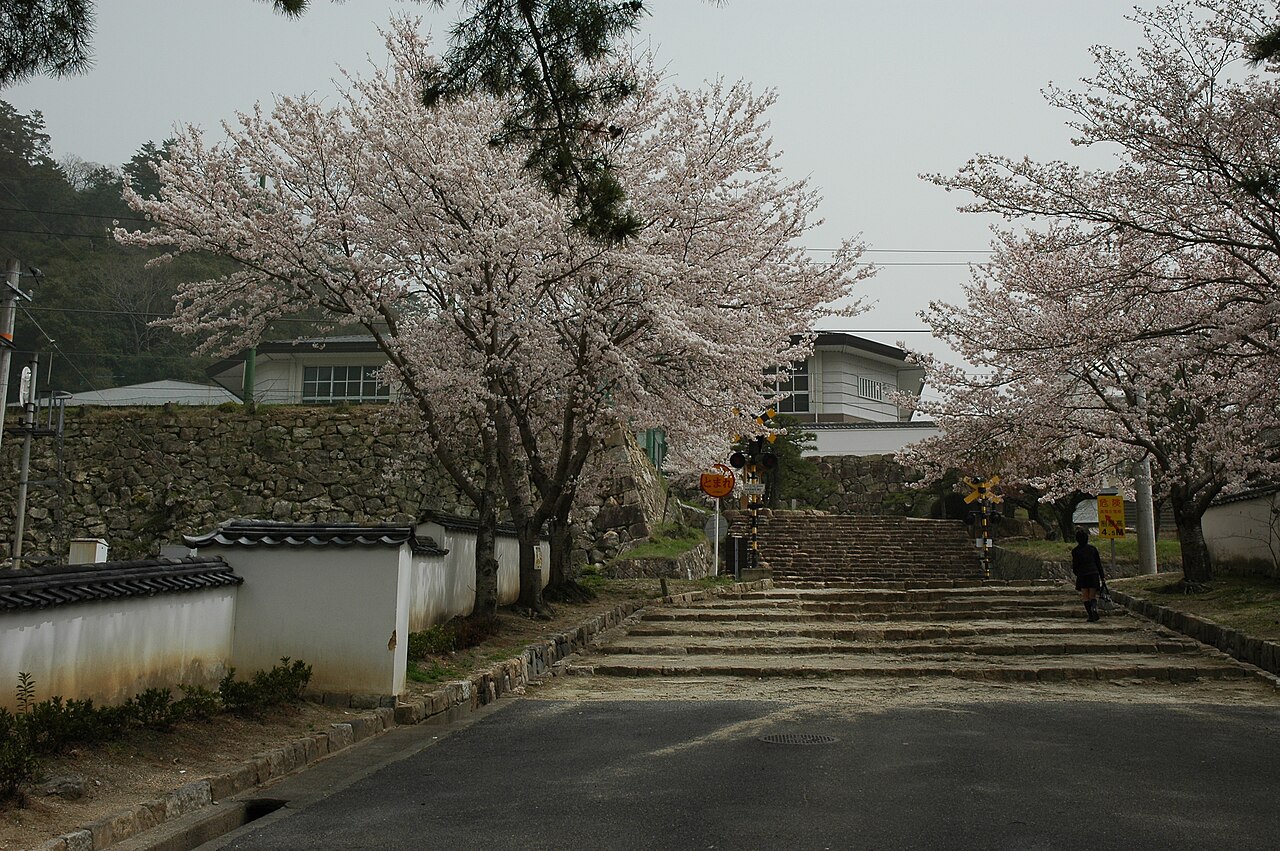
Photographs are served from this site; each caption names its author and licence. Castle facts above are drawn from the castle's Wikipedia article, credited under CC BY-SA in Sources below.
Sources and next steps
Original English guide generated from Wikidata and Wikimedia Commons records · Sources reviewed 3 November 2026. Operational details can change.
- DiscoverJapanese castle in Takahashi, Okayama prefecture
- NoticeRecorded inception: 1240
- RememberUchisange, Okayama
Restoration work and access may change. Historic interiors can have steep stairs; check official visitor information before travelling.
photo of Bitchū Matsuyama castle Hon-maru by Reggaeman · CC BY-SA 3.0 · Photo details
Official source · Source checked 2026-11-03 · Original English guide