

Hikone Castle
彦根城
Castle in brief
Hikone Castle stands in Hikone, Shiga. It is one of only twelve castles in Japan whose original main keep survives. The At a glance table below collects its type, heritage designations and official visitor link.
About Hikone Castle
Hikone Castle (彦根城, Hikone-jō) is an Edo-period Japanese castle located in the city of Hikone, Shiga Prefecture, Japan. It is considered the most significant historical site in Shiga. The site has been protected as a National Historic Site since 1951. Hikone is one of only twelve castles in Japan with its original tenshu, and one of only five castles with buildings listed as National Treasures.
Overview
Hikone Castle is located one kilometer from Lake Biwa due to land reclamation, but originally the castle was directly on the lakeshore, and the north and east sides were surrounded by water. The Hikone area is in eastern Ōmi Province, and the site was a natural bottleneck on the route of the Tōsandō (later the Nakasendō) highway connecting Heian-kyō with the eastern provinces. Strategically, it was a vital point in protecting the capital from attack from the east. In the Sengoku period, this area was controlled by the Azai clan, who were based in northern Ōmi, and who built a castle called Sawayama Castle approximately two kilometers from this site. The Azai were defeated by Oda Nobunaga, who assigned Sawayama Castle to his general Niwa Nagahide. Under Toyotomi Hideyoshi, this closest advisor, Ishida Mitsunari was entrusted with the castle. After Ishida Mitsunari was defeated at the Battle of Sekigahara in 1601, Tokugawa Ieyasu appointed his general Ii Naomasa as daimyō of a new domain centered at Sawayama Castle.
Ii Naomasa was one of the most capable and trusted of Ieyasu's generals, noted not only for his military prowess, but also for his diplomacy and strategies. At first, he used Sawayama Castle, but was not happy with its situation. The castle was considered obsolete and had weak defenses as it was divided between hilltop and hillside areas. Furthermore, it was formerly the stronghold of the enemy leader and had strong associations with the former regime. Therefore, Ii Naomasa decide to relocate his seat to a new location on the shores of Lake Biwa, constructing a new castle per the latest contemporary design. The site was previously occupied by a Buddhist temple called Hogon-ji which had been built in 1080 and which was a popular pilgrimage site for the worship of Kannon.
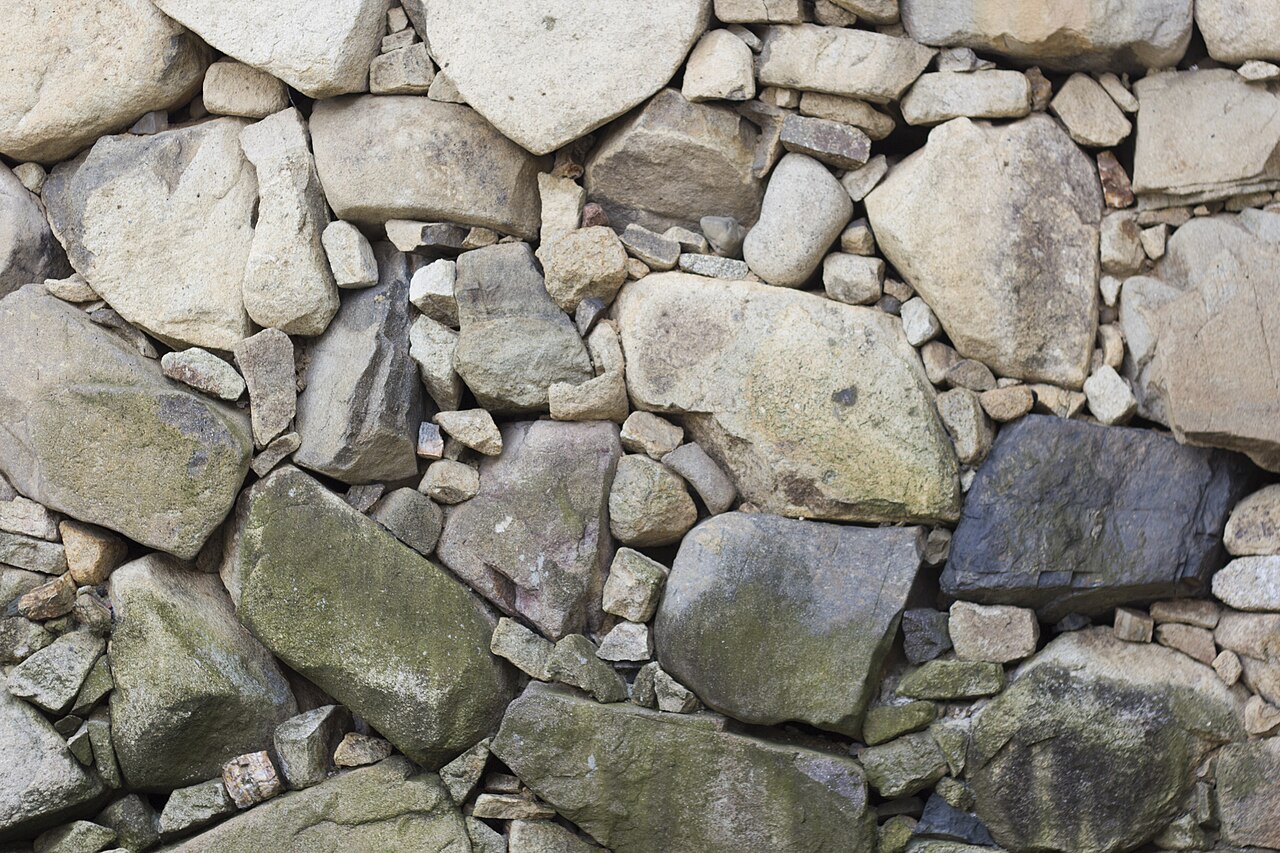
Hikone Castle consists of two concentric water moats surrounding a 100 meter hill called "Mount Konki". The hill itself is divided roughly into three sections, with the "Kane-no-maru" enclosure in the southeast, the "Nishi-no-maru" enclosure in the northwest and the "Honmaru", or inner bailey in the middle. Dry moats protect these inner enclosures and are crossed by bridges. The faces of the moats were protected by stones. Originally front gate was "Otemon" gate facing westward, but later the "Sawaguchi" gate facing southeast which connected to Nakasendō became the main gate.
To save time and expense, the Ii clan scavenged many stones and buildings by demolishing all other fortifications in their territory and bringing the materials to Hikone. The three-story tenshu located at the center of the castle was brought from Ōtsu Castle. Originally built in 1575, the exterior has an older style of decoration on each roof, and the overall structure appears short and stout, as it was modified from what was originally a five-story tower. The "Tenbin yagura" was brought from Nagahama Castle. It is a gate with two two-story yagura watchtowers on either side, which protect the dry moats in front of the gate. The "Nishinomaru Sanju Yagura" was brought from Odani Castle.
History
However, due to injuries which he had suffered in battle, he died in 1602 when construction had just begun. The castle was finally completed under his son Ii Naokatsu in 1622 after 20 years of construction. The castle was used as the administrative center of Hikone Domain. Often considered the foremost of the fudai daimyō, the Ii clan served in many important positions within the Tokugawa shogunate. During the Bakumatsu period, the tairō Ii Naosuke was virtual ruler of the country during a time of very weak and ineffectual shoguns. However, his acquiescence in ending Japan's national isolation policy under pressure from the western powers led to his assassination by pro-Sonnō Jōi forces in 1860. The final daimyō of Hikone, Ii Naonori grew increasingly dissatisfied with the hostile treatment still accorded Hikone Domain by the shogunal administration, which was dominated by the Hitotsubashi faction which had been hostile to Ii Naosuke. He also came to the realization that shogunate's military system and equipment was now obsolete compared with the Satchō Alliance. Although Hikone Domain had been one of the strongest supporters of the Tokugawa shogunate, he was among the first to support the imperial cause in the Boshin War. During the Battle of Toba-Fushimi, although Hikone forces were stationed at Osaka Castle, they did not join the shogunal army, but simply marched home. The domain later took part in combat against the pro-shogunate Ōgaki Domain, and in other locations. The new Meiji government confirmed him as imperial governor of Hikone. When the new government ordered the dismantling of all feudal-era fortification nationwide, Hikone Castle was spared by a direct request from the emperor himself, who was touring the area. This preserved Hikone Castle intact. Today it remains one of the oldest largely original-construction castles in Japan.
In 1934, the grounds of the castle were planted with over 1,000 Yoshino cherry trees. The castle and its grounds were donated by the Ii clan to the city of Hikone in 1944. During World War II, the city of Hikone was scheduled for destruction by an air raid on the night of August 15, 1945, but the end of the war occurred at noon that same day and the bombing was not conducted.
The main keep of Hikone Castle, along with its attached Tsuke Turret and Tamon Turret, were designated as a National Treasure by the Ministry of Education, Science, Sports and Culture in 1952.
Several other structures have been accorded Important Cultural Property status. Like the main keep complex, most of these structures are actually complexes of two or more connected buildings:
Umaya (馬屋, Stable)
Tenbin Yagura (天秤櫓, Balance Scale Turret; 5 connected structures)
Taikomon Yagura oyobi Tsuzuki Yagura (太鼓門及び続櫓, Drum Gate and Tsuzuki Turret; 2 connected structures)
Ninomaru Sawachiguchi Tamon Yagura (二の丸佐和口多聞櫓, Second Bailey Sawachiguchi Tamon Turret; 2 connected structures)
Nishinomaru Sanju Yagura oyobi Tsuzuki Yagura (西の丸三重櫓及び続櫓, West Bailey Three-story Turret and Tsuzuki Turrets; 3 connected structures)
Major repairs were undertaken to the tenshu from 1957 to 1960, and on the various yagura from 1960 to 1968. In 1987, the daimyō palace was restored as the "Hikone Castle Museum". Further repairs to the castle were undertaken from 1993 to 1996. On April 6, 2006, Hikone Castle was selected as one of Japan's Top 100 Castles by the Japan Castle Foundation in 2006.
The castle is about a 15-minute walk from Hikone Station on the JR West Biwako Line.
Literature
De Lange, William (2021). An Encyclopedia of Japanese Castles. Groningen: Toyo Press. pp. 600 pages. ISBN 978-9492722300.
Schmorleitz, Morton S. (1974). Castles in Japan. Tokyo: Charles E. Tuttle Co. pp. 144–145. ISBN 0-8048-1102-4.
Motoo, Hinago (1986). Japanese Castles. Tokyo: Kodansha. p. 200 pages. ISBN 0-87011-766-1.
Mitchelhill, Jennifer (2004). Castles of the Samurai: Power and Beauty. Tokyo: Kodansha. p. 112 pages. ISBN 4-7700-2954-3.
Turnbull, Stephen (2003). Japanese Castles 1540-1640. Osprey Publishing. p. 64 pages. ISBN 1-84176-429-9.
Text adapted from Wikipedia (“Hikone Castle”), published under CC BY-SA 4.0. Source article
At a glance
- Keep statusOriginal keep — National Treasure
- AccessAbout a 15-minute walk from Hikone Station (JR Biwako Line)
- TypeJapanese castle, hirayamajiro
- Main keepHikone Castle Keep Tower
- Recorded inception1603
- Founded byIi Naokatsu
- Heritage statusNational Treasure of Japan, Historic Site of Japan
- MunicipalityHikone
- Coordinates35.27639, 136.25167 · Open in Google Maps
- Official websitehttps://hikonecastle.com/
Highlights
- The keep was moved here from Otsu Castle and finished as part of a 20-year build completed in 1622 under the Ii clan.
- Hikone was spared the Meiji demolition order by a direct request from the emperor, who was touring the area.
- The Tenbin Yagura gate, flanked by two two-storey turrets, and the double water moats survive with the keep.
Planning a visit
The record carries an official website, linked below. Hours, access and any closures change, so treat that site — not this guide — as the current source before travelling.
More castles to explore
Closer look
- The castle originally stood directly on the Lake Biwa shore, with water on its north and east sides; land reclamation has since left it about a kilometre from the lake.
- Hikone was selected as one of Japan's Top 100 Castles by the Japan Castle Foundation in 2006.
Photographs are served from this site; each caption names its author and licence. Castle facts above are drawn from the castle's Wikipedia article, credited under CC BY-SA in Sources below.
Sources and next steps
Original English guide generated from Wikidata and Wikimedia Commons records · Sources reviewed 31 October 2026. Operational details can change.
- DiscoverJapanese castle
- NoticeRecorded inception: 1603
- RememberHikone, Shiga
Restoration work and access may change. Historic interiors can have steep stairs; check official visitor information before travelling.
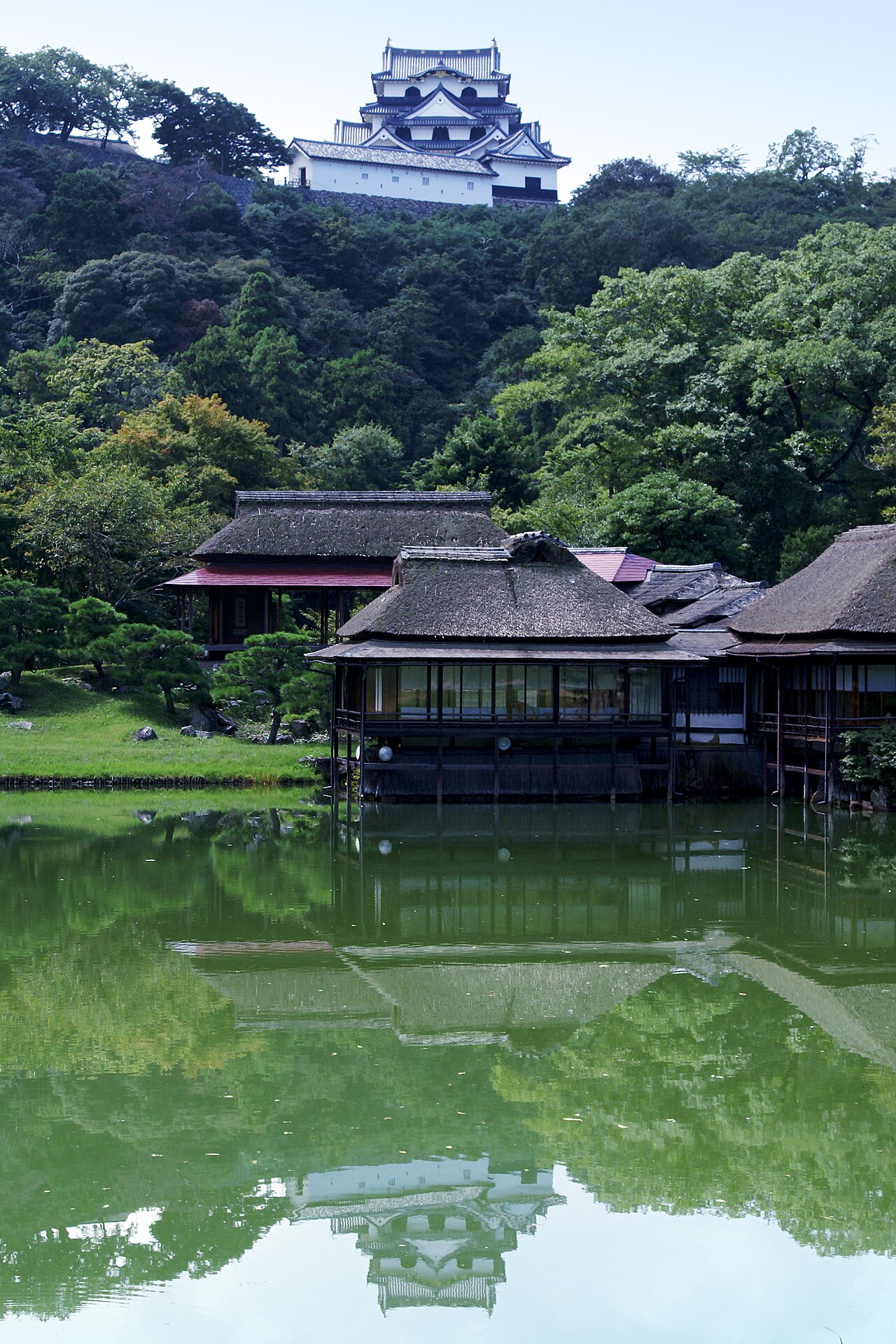
Hikone Castle is a Japanese Edo-period castle in the city of Hikone, Shiga Prefecture. Martin Falbisoner · CC BY-SA 4.0 · Photo details
Official source · Source checked 2026-10-31 · Original English guide