

Matsue Castle
松江城
Castle in brief
Matsue Castle stands in Matsue, Shimane. It is one of only twelve castles in Japan whose original main keep survives. The At a glance table below collects its type, heritage designations and official visitor link.
About Matsue Castle
Matsue Castle (松江城, Matsue-jō) is a Japanese castle located in Matsue, Shimane Prefecture.
Matsue Castle was constructed from 1607 to 1611 by Horio Yoshiharu, the first daimyō of the Matsue Domain, during the early Edo period. Ownership was passed to the Izumo branch of the Kyōgoku in 1633 and then the Matsudaira, a junior branch of the ruling Tokugawa clan, in 1637. The Matsudaira donated Matsue Castle to the city of Matsue in 1927.
Matsue Castle is one of few remaining feudal Japanese castles that retains its main keep in its original wooden form and not a modern concrete reconstruction. Built after the last great war of feudal Japan, the keep has survived earthquakes, fires, wars and other causes that destroyed or damaged many Japanese castles. However, a number of its castle buildings were demolished during the early Meiji period, leaving only the keep, an attached turret and stone walls existing as original structures today, though some of the other castle buildings have been reconstructed in modern times. Matsue Castle, standing on the shores of Lake Shinji, is one of Japan's Three Great Lake Castles and the heart of Matsue's central riverside district.
History
Of the 100+ castles remaining in Japan, Matsue Castle is the only one with a surviving main keep in the San'in region. This keep is the second largest, the third tallest (30m) and the sixth oldest amongst Japanese castles. It was built over a period of 5 years by the daimyō of the Izumo region, Horio Yoshiharu, and was completed in 1611.
After the reigns of Horio Tadaharu and Kyōgoku Tadataka, Matsudaira Naomasa, a grandson of Tokugawa Ieyasu, became Lord of the castle, after being transferred from Matsumoto in Shinano Province, and thus began a reign that lasted 10 generations of the Matsudaira clan over a period of 234 years.
In 1875, all of the buildings within the castle were dismantled, with the exception of the castle tower itself and attached turret, which were allowed to remain due to pressure from interest groups. These buildings underwent a complete renovation between 1950 and 1955. In 2001, several of the castle's former turrets were reconstructed.
The keep is a complex structure, built in a watchtower-style, that appears to be five stories from the outside, but has, in fact, six levels inside. Most of the walls of the keep are painted black. It is a strong structure, built to withstand warfare, yet at the same time, it is majestic and solemn, reminiscent of the Momoyama style.
The tenshu and attached turret of Matsue Castle have been registered as a national treasure of Japan since July 9, 2015.
Literature
Benesch, Oleg and Ran Zwigenberg (2019). Japan's Castles: Citadels of Modernity in War and Peace. Cambridge: Cambridge University Press. p. 374. ISBN 9781108481946.
De Lange, William (2021). An Encyclopedia of Japanese Castles. Groningen: Toyo Press. pp. 600 pages. ISBN 978-9492722300.
Schmorleitz, Morton S. (1974). Castles in Japan. Tokyo: Charles E. Tuttle Co. ISBN 0-8048-1102-4.
Motoo, Hinago (1986). Japanese Castles. Tokyo: Kodansha. p. 200 pages. ISBN 0-87011-766-1.
Mitchelhill, Jennifer (2013). Castles of the Samurai:Power & Beauty. USA: Kodansha. ISBN 978-1568365121.
Text adapted from Wikipedia (“Matsue Castle”), published under CC BY-SA 4.0. Source article
At a glance
- Keep statusOriginal keep — National Treasure (designated 2015)
- TypeJapanese castle, hirayamajiro
- Main keepMatsue Castle Keep Tower
- Recorded inception1607
- Founded byHorio Tadauji
- Heritage statusNational Treasure of Japan, Historic Site of Japan
- MunicipalityMatsue
- Coordinates35.47498, 133.05056 · Open in Google Maps
- Official websitehttps://www.matsue-castle.jp/
Highlights
- The only surviving original keep in the San'in region, and the second largest and third tallest (30 m) of the twelve.
- Built 1607–1611 by Horio Yoshiharu after the last great war of feudal Japan, yet built for war: black walls, five apparent storeys over six floors.
- It stands on the shore of Lake Shinji and is counted among Japan's three great lake castles.
Planning a visit
The record carries an official website, linked below. Hours, access and any closures change, so treat that site — not this guide — as the current source before travelling.
More castles to explore
Closer look
- Ownership passed from the Horio to the Kyogoku in 1633 and to the Matsudaira in 1637; the Matsudaira donated the castle to the city of Matsue in 1927.
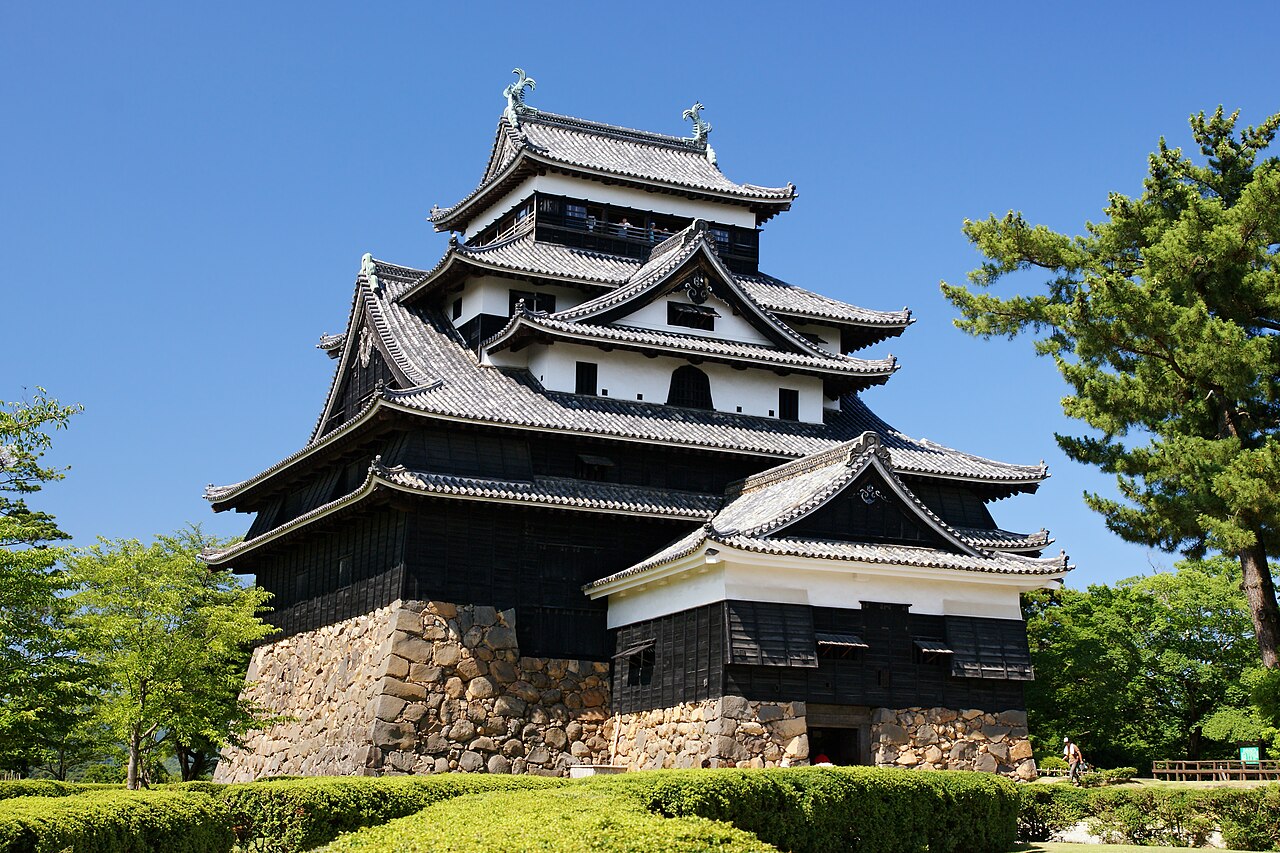
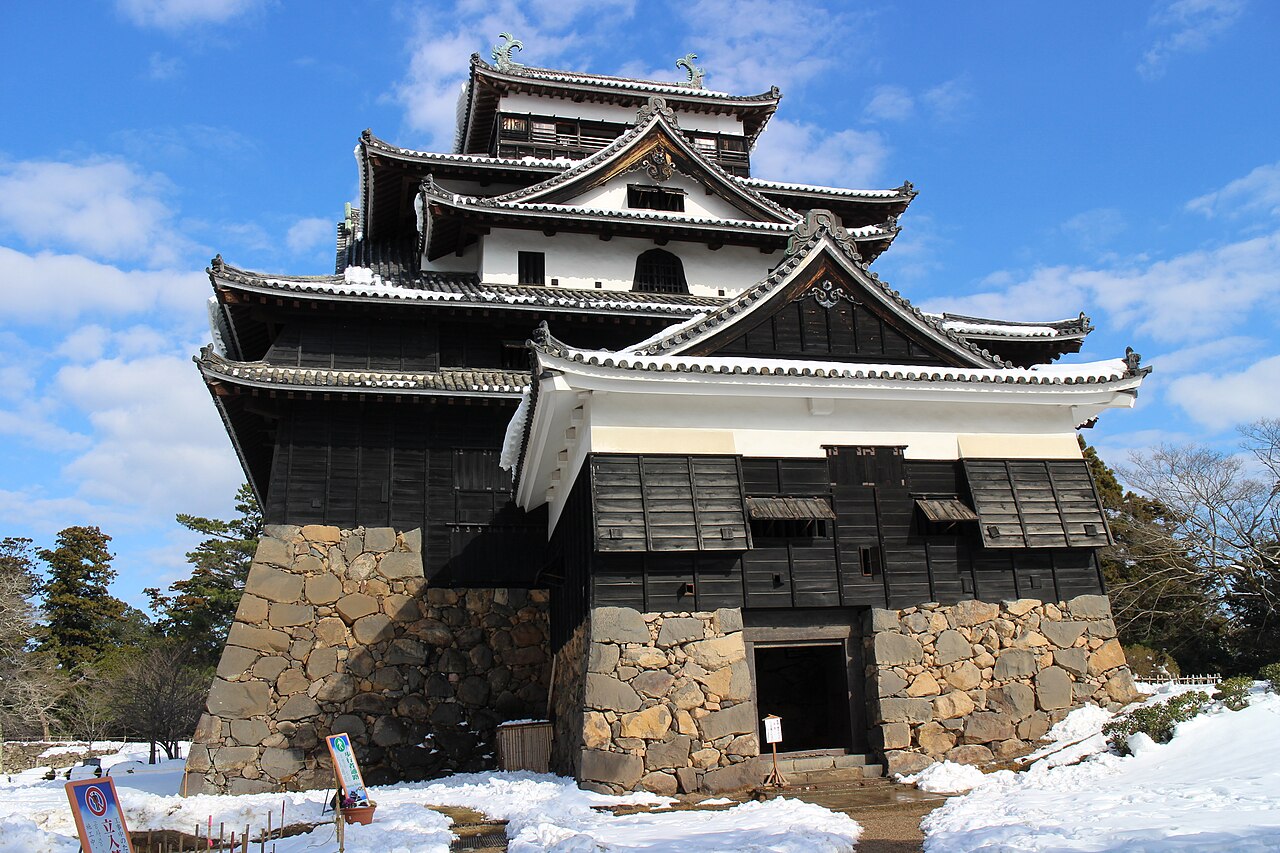
Photographs are served from this site; each caption names its author and licence. Castle facts above are drawn from the castle's Wikipedia article, credited under CC BY-SA in Sources below.
Sources and next steps
Original English guide generated from Wikidata and Wikimedia Commons records · Sources reviewed 3 November 2026. Operational details can change.
- DiscoverJapanese castle
- NoticeRecorded inception: 1607
- RememberMatsue, Shimane
Restoration work and access may change. Historic interiors can have steep stairs; check official visitor information before travelling.
Matsue Castle in Matsue, Shimane prefecture, Japan 663highland · CC BY 2.5 · Photo details
Official source · Source checked 2026-11-03 · Original English guide